
Article Outline
- Introduction
- Defining GSM (Grams per Square Metre) in commercial textile procurement
- The misconception that “higher GSM always means better quality”
- Why matching GSM to operational use cases matters for Australian B2B buyers
- What Is GSM in Towels? (The Technical Definition)
- Mathematical calculation: Fabric weight relative to surface area
- Structural components influencing GSM: Loop density, pile height, and yarn thickness
- How GSM Directly Affects Towel Quality Factors
- Absorbency & Moisture Retention: Loop surface area vs. water holding capacity
- Thickness, Plushness, & Hand-Feel: Pile density and sensory perception
- Drying Time & Laundry Operational Costs: Thermal energy consumption in commercial laundries
- Durability & Structural Longevity: Base weave strength vs. pile weight
- The Comprehensive Towel GSM Spectrum: 300 to 700+ GSM
- 300–390 GSM: Lightweight utility, fitness, and travel
- 400–490 GSM: Fast-drying hospitality, healthcare, and promotional lines
- 500–590 GSM: Premium commercial hotel bath towels and retail standards
- 600–700+ GSM: Luxury 5-star resort suites, luxury retail, and executive spas
- GSM Is Not the Only Factor: The Interplay of Cotton & Construction
- Fiber staple length: Carded vs. Combed Cotton
- Yarn twist: 16/s single vs. 20/2 double ring-spun yarn vs. Zero-twist
- Weave techniques: Single terry, double terry, waffle, and velour
- Selecting the Right GSM for Australian Business Applications
- Commercial Hotels, Motels, & Serviced Apartments
- Gyms, Fitness Clubs, & Wellness Centers
- Retail, E-Commerce, & Private Label Textile Brands
- Institutional Healthcare & Aged Care Facilities
- Manufacturing Custom GSM Towels with Noorpur Industries Pvt Ltd
- Precision weaving, yarn matching, and quality control in Pakistan
- Export logistics, hydraulic baling CBM optimization, and shipping to Australia
- Conclusion & B2B Inquiry Call to Action
Full SEO Article
How GSM Affects Towel Quality: A Technical Guide for Australian Buyers
In commercial textile procurement, Grams per Square Metre (GSM) is the standard unit of measurement used to evaluate towel weight, density, and structural composition. Whether you are sourcing linens for a hotel chain in Sydney, expanding an e-commerce home brand in Melbourne, or managing gym supplies across Queensland, understanding how GSM affects towel quality is essential for optimizing procurement budgets and product performance.
A common misconception among commercial buyers is that higher GSM automatically equals a superior towel. In practice, GSM is a functional specification rather than a blanket score of excellence. A 700 GSM towel that takes excessive time to dry in a commercial laundry setting can create operational bottlenecks for a resort, whereas a lightweight 350 GSM towel would feel inadequate in a luxury spa suite.
Selecting the correct GSM requires balancing absorbency, plushness, drying speed, tensile durability, and commercial wash costs.
What Is GSM in Towels?
GSM stands for Grams per Square Metre. It measures the density and weight of the woven fabric, indicating how much raw cotton fiber is packed into one square metre of towel surface.
GSM = Fabric Weight (grams) / Area (m²)
Two main structural components dictate the final GSM value of a terry towel during the weaving process:
- Pile Loop Height & Density: Longer, tightly packed terry loops increase the overall volume of cotton per square metre, raising the GSM.
- Ground Fabric Weight: The strength and weight of the underlying warp and weft threads (the base fabric into which the loops are woven) contribute directly to the total mass.
Lower GSM towels (300–400 GSM) are thinner and lighter because they feature shorter pile loops and looser weaving. High GSM towels (600–700+ GSM) use dense, elongated pile loops anchored into a heavier base weave, producing a thicker, heavier towel.
How GSM Directly Affects Towel Quality Factors
Evaluating towel quality and GSM requires analyzing how fabric density impacts performance characteristics during daily commercial use.
1. Absorbency and Moisture Retention
Water absorbency depends on the surface area of cotton available to trap moisture through capillary action.
- Low GSM (300–400): Absorbs surface water rapidly due to lower fabric volume, but reaches total saturation quickly.
- High GSM (500–700+): Contains significantly more cotton fibers per square centimetre. This dense pile structure absorbs larger volumes of water without feeling oversaturated, making high GSM towels the standard for bath towels and luxury spa sheets.
2. Thickness, Plushness, and Hand-Feel
Tactile feel directly influences guest satisfaction in hospitality and retail environments.
- Towels woven at 300 to 350 GSM feel lean and utilitarian.
- As fabric weight increases toward 550 to 650 GSM, the pile height deepens, creating a plush hand-feel that retains warmth and cushions against the skin.
3. Drying Speed and Commercial Laundry Economics
Drying speed is directly related to GSM, making it a critical financial factor for businesses managing high-volume laundry operations.
A 650 GSM towel retains significantly more water post-extraction than a 400 GSM towel. Consequently, commercial gas dryers require longer run times and higher thermal energy to dry high-GSM items. For high-turnover regional motels or fitness clubs, utilizing medium-weight towels (400–450 GSM) controls energy expenditure while ensuring acceptable absorbency.

4. Durability and Structural Longevity
Higher GSM does not automatically guarantee a longer working life. Durability depends on the balance between the ground weave strength and the loop pile:
- A high GSM towel woven with weak, carded single yarns can shed fibers, snag, and degrade rapidly in commercial laundries.
- A medium GSM towel (450 GSM) woven with double-twisted yarns (20/2 double ring-spun) on a high-density ground weave will outlast a poorly constructed 600 GSM towel.
The Comprehensive Towel GSM Spectrum
Understanding where different weights fall on the GSM chart helps Australian procurement managers select the correct product for their application.
300–390 GSM: Lightweight Utility
- Characteristics: Thin, lightweight, highly breathable, fast-drying.
- Best Used For: Fitness centers, spin studios, hairdressing salons, promotional giveaways, and flat-woven Turkish pestemal beach towels.
- Why Choose This Range: Low unit price, minimal storage space required, fast wash-to-dry turnarounds.
400–490 GSM: Standard Commercial & Hospitality
- Characteristics: Medium weight, dependable absorbency, balanced drying speed.
- Best Used For: Regional motels, commercial hotel bath towels, healthcare facilities, school boarding houses, and outdoor cabana pool towels.
- Why Choose This Range: The most cost-effective solution for businesses laundering hundreds of kilograms of terry towelling daily.
500–590 GSM: Premium Commercial & Retail Standard
- Characteristics: Substantial weight, plush pile loops, high moisture absorption capacity.
- Best Used For: 4-star and 5-star hotel bath towels, premium e-commerce retail collections, boutique retreats, and executive gym facilities.
- Why Choose This Range: Delivers a luxurious user experience while remaining manageable in commercial laundering systems.
600–700+ GSM: Executive Luxury
- Characteristics: Exceptionally thick, heavy, dense, and soft.
- Best Used For: Luxury hotel bath sheets, high-end retail collections, day spas, and executive corporate gifts.
- Why Choose This Range: Provides maximum comfort and perceived value where product weight is a primary brand differentiator.
GSM Is Not the Only Factor: Cotton Quality and Construction
When comparing GSM and towel quality, fabric weight must be evaluated alongside raw material specifications and weaving methods.
1. Cotton Fiber Staple Length
The quality of the raw cotton fiber determines whether a high-GSM towel remains soft or becomes harsh over time:
- Carded Cotton: Contains mixed staple lengths. Economical, but produces more lint and offers a coarser texture.
- Combed Cotton: Raw cotton fibers undergo an extra combing process to remove short, coarse strands. Long-staple combed cotton produces smooth, low-lint yarns that keep high-GSM towels soft through repeated commercial washings.
2. Yarn Twist Construction
How cotton fibers are twisted into yarn impacts strength and loop performance:
- 16/s Single Ring-Spun Yarn: Standard construction offering dependable absorbency and soft hand-feel for general retail bath towels.
- 20/2 Double Ring-Spun Yarn: Two individual yarns are twisted together to form a single strong strand. Ideal for institutional and hotel towels, preventing loop pulling and edge fraying under industrial washing.
- Zero-Twist Yarns: Un-twisted long-staple fibers trap air inside the yarn core, producing a high-volume, low-weight pile with immediate surface absorbency.
3. Hem Construction and Lock-Stitching
Even a 600 GSM towel will fail prematurely if its edges fray. High-turnover commercial towels require double lock-stitched side hems to withstand high-speed extraction cycles in industrial laundries.
Selecting the Right GSM for Australian Business Applications
1. Commercial Hotels, Motels, and Accommodations
- Bath Towels: 450–550 GSM balances guest comfort with laundry processing efficiency.
- Hand Towels & Face Washcloths: 400–450 GSM ensures fast drying on bathroom towel rails.
- Bath Mats: 650–850 GSM provides a firm, absorbent base underfoot that holds its shape.
2. Gyms, Fitness Clubs, and Wellness Centers
- Workout / Sweat Towels (40×70 cm): 350–400 GSM allows members to dry off quickly while ensuring towels fold compactly into gym bags and dry rapidly between laundry runs.
3. Retail, E-Commerce, and Home-Textile Brands
- Mainstream Retail Collections: 500–550 GSM offers an ideal balance of weight, price point, and visual appeal on retail shelves.
- Luxury Retail Collections: 600–650 GSM targets buyers seeking thick, hotel-grade bath sheets.
4. Promotional Merchandise and Event Agencies
- Printed or Jacquard Beach Towels: 380–420 GSM keeps shipping costs manageable while providing a smooth surface for printed logos or woven patterns.
Manufacturing Custom GSM Towels with Noorpur Industries Pvt Ltd
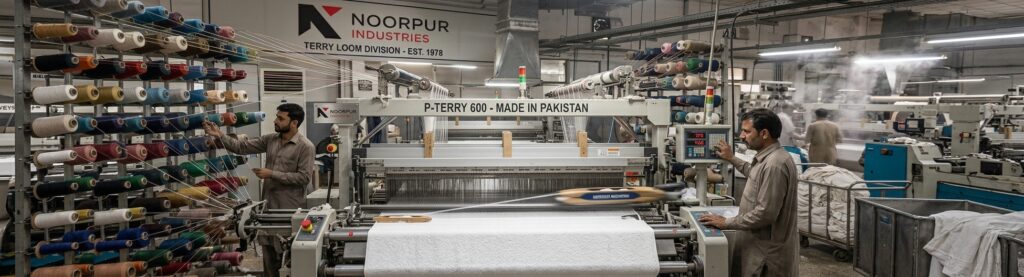
Sourcing towels tailored to your exact weight specifications requires partnering with an experienced towel manufacturer in Pakistan. Noorpur Industries Pvt Ltd manufactures terry towels engineered to your target GSM, yarn choice, dimensions, and brand requirements.
Strict GSM Tolerance Controls
Our manufacturing process maintains tight weight tolerances (within +/- 3%) across production runs, ensuring consistency from face washcloths to heavy bath sheets.
Custom Yarn and Weave Engineering
We help Australian buyers configure the ideal combination of fabric weight, yarn twist, and border styling to meet target price points and operational requirements:
- Hospitality Lines: 20/2 double ring-spun cotton in 450–550 GSM with double-stitched hems for commercial laundries.
- Retail Lines: 100% combed cotton or zero-twist yarns in 550–650 GSM with woven dobby or jacquard details.
- Promotional Lines: Vibrant, reactive-dyed terry towels in 350–400 GSM optimized for shipping efficiency.
Ocean Freight and CBM Optimization
Importing custom bulk towels from Pakistan to Australia requires careful container space management. Noorpur Industries utilizes hydraulic press baling for bulk commercial orders and compressed carton packaging for retail goods. This maximizes Cubic Metre (CBM) utilization, lowering ocean freight costs per unit to Australian ports (Sydney, Melbourne, Brisbane, Fremantle).
Frequently Asked Questions (FAQs)
What does GSM mean on towels?
GSM stands for Grams per Square Metre. It is the standard metric used to measure fabric density and weight. A higher GSM indicates a thicker, denser towel with more cotton fibers per square metre, while a lower GSM indicates a lighter, thinner fabric.
Does a higher GSM always mean a better quality towel?
Not necessarily. While a higher GSM (500–700) creates a thicker, more absorbent towel, “quality” depends on operational use. A 400 GSM towel woven with strong double ring-spun yarn may outlast a poorly constructed 600 GSM towel while drying much faster in commercial laundries.
What is the best GSM for commercial hotel bath towels?
For 3-star to 4-star hotels and motels, 450 to 500 GSM offers an ideal balance of guest comfort, absorbency, and fast drying times. For 5-star luxury hotels and resorts, 550 to 650 GSM is preferred for a plush, high-end guest experience.
What GSM is best for gym and fitness towels?
A GSM range of 350 to 400 is recommended for gym towels. This weight provides adequate sweat absorbency while remaining lightweight, compact, and fast-drying during high-turnover laundry runs.
How does towel GSM affect commercial laundry costs?
Higher GSM towels absorb more water and retain more moisture post-wash. Consequently, they require longer drying cycles and higher thermal energy in commercial gas dryers, increasing utility costs per wash load compared to lower GSM towels.
What is the typical weight tolerance for custom manufactured towels?
In professional textile manufacturing, an industry-standard tolerance allowance of +/- 3% to 5% on weight (GSM) and dimensions is expected due to natural cotton moisture absorption and weaving calibrations.
Optimize Your Towel Specifications with Noorpur Industries
Selecting the right GSM is essential for balancing user experience, product longevity, and procurement budgets. Whether you need lightweight gym towels, durable 450 GSM motel supplies, or luxury 600 GSM retail bath sheets, Noorpur Industries Pvt Ltd has the manufacturing capabilities and export experience to deliver custom towels built to your exact specifications.
Ready to discuss your bulk towel requirements?
Contact our export management team today to request fabric swatches, submit technical briefs, or receive a factory-direct manufacturing quote for the Australian market.

Get Expert Assistance on Your Custom Towel Specifications
Choosing the right GSM, yarn, and weave structure is critical for balancing product quality and operational efficiency. Noorpur Industries Pvt Ltd manufactures custom cotton towels engineered to your exact weight and performance requirements. Contact our B2B export team today to discuss your technical specifications, request physical sample swatches, or receive a factory-direct quote.