
Article Outline
- Introduction
- The importance of cotton towels in Australian retail, hospitality, and commercial sectors
- Challenges faced by Australian procurement teams: Local distributor markups vs. direct manufacturing
- Why Pakistan remains a premier global hub for cotton terry towel production
- 100% Cotton vs. Synthetic Blends: The Commercial Reality
- Absorbency, breathability, and tactile comfort
- Wash durability and commercial laundering resistance
- Understanding Cotton Quality & Yarn Construction
- Carded vs. Combed Cotton (Staple length mattering for lint reduction)
- Yarn spinning types: Ring-spun, 20/2 double ring-spun, and zero-twist
- Grams per Square Metre (GSM) decision framework for Australian applications
- Key Manufacturing Variables for Bulk Towel Procurement
- Weaving Styles: Terry pile, velour, dobby border, and waffle weave
- Dyeing & Fastness: Reactive dyeing vs. Indanthrene (VAT) dyeing for chlorine/UV exposure
- Hemming & Stitching: Double lock-stitching for commercial laundry durability
- Sector-Specific Sourcing Standards for Australia
- Hospitality & Resorts (Hotels, Motels, Serviced Apartments)
- Gyms, Fitness Clubs, & Wellness Facilities
- Retail, E-Commerce, & Private-Label Textile Brands
- Promotional & Corporate Merchandise Agencies
- Importing Wholesale Cotton Towels from Pakistan to Australia
- Quality assurance and lab-dip approvals
- ACCC care labelling compliance and private-label packaging
- Freight logistics, container CBM optimization, and Australian customs clearance
- Partnering with Noorpur Industries Pvt Ltd
- OEM/ODM contract manufacturing capabilities, quality control, and direct export services
- Frequently Asked Questions (FAQs)
- Conclusion & B2B Call to Action
Full SEO Article
Cotton Towels: What Australian Commercial Buyers Must Know
Procuring wholesale cotton towels for the Australian market requires a strict balance between physical luxury and operational durability. Whether you manage purchasing for a luxury hotel chain in Sydney, operate an e-commerce home-textiles brand in Melbourne, or distribute commercial linens across Queensland, the choice of towel fabric directly dictates guest satisfaction, brand reputation, and long-term laundry replacement costs.
While synthetic microfibres and polyester blends have captured niche utility markeats, 100% cotton towels remain the undisputed industry standard across hospitality, retail, and healthcare. However, not all cotton towels perform identically under wholesale commercial conditions. Understanding raw fiber selection, yarn spinning methods, weaving structures, and Grams per Square Metre (GSM) is essential before committing to bulk manufacturing orders.
Working directly with primary cotton towel manufacturers in Pakistan allows Australian procurement managers to control these structural variables at the factory level, securing wholesale pricing while engineering products tailored to Australian commercial standards.
100% Cotton vs. Synthetic Blends: The Commercial Reality
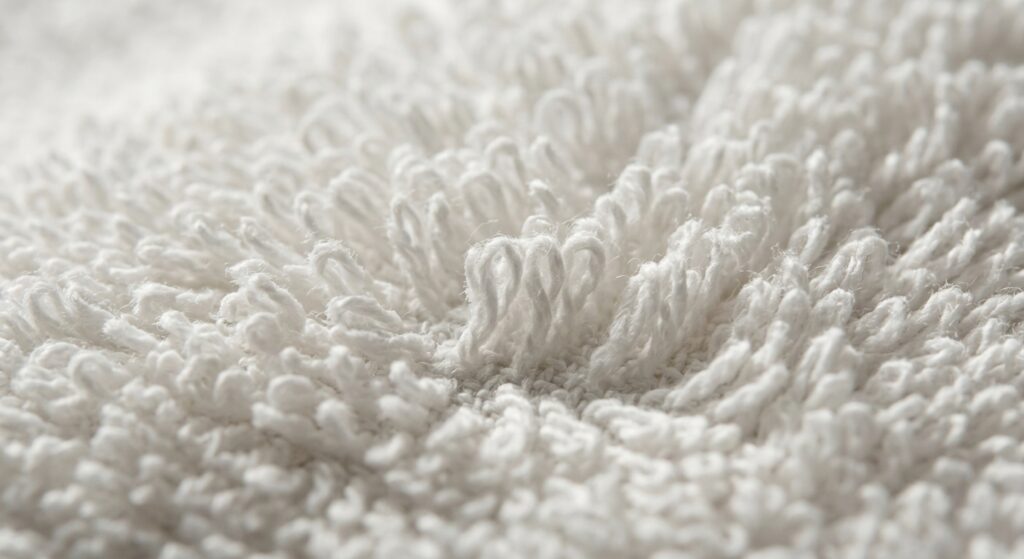
Cotton possesses natural hydrophilic properties, meaning its cellular structure naturally attracts and absorbs water molecules through capillary action. Synthetic fibers like polyester are naturally hydrophobic; they push water around rather than absorbing it unless chemically treated.
Natural Absorbency and Moisture Absorption
Pure cotton terry towels trap moisture inside the fiber core and within the woven loop pile. This allows users to dry off effortlessly with minimal friction against the skin—a requirement for high-end hospitality and luxury retail brands.
Wash Durability and Laundering Economics
Commercial laundries in AustraliaSubject linens to industrial wash cycles reaching 70°C to 80°C alongside heavy detergent formulation and high-speed mechanical extraction. Pure cotton towels withstand repeated thermal and chemical processing without losing structural integrity, whereas synthetic blends frequently suffer from fiber breakdown, surface pilling, and loss of shape over time.
Understanding Cotton Quality & Yarn Construction
Selecting high-performing wholesale cotton towels requires looking beyond surface softness to inspect how raw cotton fibers are processed into yarn.
Carded vs. Combed Cotton
Raw cotton undergoes cleaning and carding to align its fibers.
- Carded Cotton: Retains a mix of short and long fibers. It produces durable, economical yarns suitable for high-turnover utility towels.
- Combed Cotton: Passes through fine metal combs to strip away short, weak fibers, retaining only long-staple cotton strands. The resulting yarn is smooth, strong, and highly resistant to surface linting—vital for luxury cotton bath towels and premium retail lines.
Yarn Twisting Styles
- 16/s Single Ring-Spun: Standard single-ply construction delivering balanced softness and absorbency.
- 20/2 Double Ring-Spun: Two fine yarns are twisted together into a single composite thread. This creates exceptional tensile strength that resists snagging and loop pulling in industrial washing equipment, making it the preferred choice for cotton hotel towels.
- Zero-Twist Yarn: Long-staple cotton fibers are held together with a temporary water-soluble binder rather than mechanical twisting. This traps air within the core, producing an exceptionally plush, lightweight, and fast-drying towel.
Choosing the Right GSM (Grams per Square Metre)
GSM measures the density and weight of the towel fabric. Matching fabric weight to operational requirements avoids unnecessary drying costs while meeting user expectations:
- 300–390 GSM: Lightweight and fast-drying. Ideal for fitness centers, salon hand towels, travel sets, and flat-woven pestemal beach towels.
- 400–490 GSM: Medium weight. The sweet spot for regional motels, outdoor pool lines, healthcare facilities, and promotional giveaways where wash-cycle efficiency is critical.
- 500–590 GSM: Premium commercial weight. Standard for 4-star and 5-star hotel bath towels, boutique retreats, and retail home collections.
- 600–700+ GSM: Heavyweight luxury. Reserved for executive resort suites, luxury retail bath sheets, and high-end spa lines demanding maximum pile depth.
Key Manufacturing Variables for Bulk Towel Procurement
When placing direct manufacturing orders with towel exporters in Pakistan, specifying precise construction parameters prevents quality variations across production batches.
1. Dyeing Techniques and Colorfastness
For Australian hospitality and commercial users, colorfastness is paramount:
- Reactive Dyeing: Provides exceptional color precision for matching brand Pantone (PMS) shades. Suited for retail collections, e-commerce brands, and promotional lifestyle towels.
- Indanthrene (VAT) Dyeing: A chemical dyeing process where pigments are fused deep into the cotton fibers. Essential for cotton hotel towels, pool cabana lines, and salon linens because it resists fading caused by chlorine bleach, direct Australian UV exposure, and high-temperature laundering.
2. Edges and Hem Stitching
The side hems of commercial towels represent their weakest structural point. High-volume towels should always feature double lock-stitched side hems rather than simple single-needle chain stitching. This reinforcement prevents the seams from splitting open under industrial spin-drying extraction.
Sector-Specific Sourcing Standards for Australia
Different commercial sectors across Australia require specific towel builds based on end-use demands.
Hotels, Resorts, and Accommodations
Hospitality procurement focuses on longevity and laundering efficiency. Hotels prefer 450–550 GSM white towels constructed with 20/2 double ring-spun yarn and Indanthrene vat dyeing to withstand continuous industrial wash cycles.
Gyms, Fitness Clubs, and Wellness Centers
Fitness facilities require compact, highly absorbent cotton hand towels and sweat towels (350–400 GSM). These dry rapidly in commercial tumble dryers, allowing facilities to process multiple wash loads daily with reduced energy consumption.
Retail, E-Commerce, and Private-Label Brands
Retail buyers prioritize sensory appeal, vibrant colors, custom packaging, and brand presentation. Ideal specs include 500–600 GSM combed cotton featuring decorative dobby headers, custom woven brand labels, and barcode hangtags ready for immediate distribution.
Importing Wholesale Cotton Towels from Pakistan to Australia
Pakistan is recognized globally as an authority in cotton textile manufacturing, benefiting from direct access to premium home-grown long-staple cotton, skilled textile craftspeople, and advanced weaving infrastructure.
1. Quality Control and Pre-Production Sampling
Before initiating bulk production, reliable cotton towel suppliers provide physical lab dips (color swatches) and pre-production counter-samples. This step allows Australian buyers to verify hand-feel, loop density, edge stitching, and exact Pantone color matching.
2. Australian Compliance and Private-Label Packaging
Textiles sold in Australia must comply with mandatory Australian Competition and Consumer Commission (ACCC) care labelling standards. Labels must clearly state fiber composition (e.g., 100% Cotton), origin, and care instructions in English. Private-label buyers can integrate custom woven side labels, satin care tags, and retail-ready polybags.terry to
3. Shipping Logistics and Container Optimization
Ocean transit from Karachi Port to primary Australian container ports (Sydney, Melbourne, Brisbane, Fremantle) averages 20 to 28 days. Experienced exporters utilize hydraulic baling presses (for bulk commercial stock) or compressed export cartons to optimize container Cubic Metres (CBM), significantly reducing freight costs per unit.
Partnering with Noorpur Industries Pvt Ltd
As a premier cotton towel manufacturer in Pakistan, Noorpur Industries Pvt Ltd specializes in contract OEM/ODM manufacturing for Australian importers, hotel groups, commercial laundries, and retail brands.
Full OEM/ODM Customization
Noorpur Industries produces pure cotton towels custom-engineered to your tech packs. From configuring specific GSM targets and yarn twists (16/s single, 20/2 double, zero-twist) to implementing complex jacquard logos and dobby borders, we match product construction to your business needs.
Stringent Quality Assurance
Our manufacturing facility enforces rigorous quality control protocols across all production stages—including yarn tensile testing, weave uniformity checks, colorfastness verification, and final edge-stitching inspections.
Streamlined Export Fulfillment
We manage all export documentation, custom packaging requirements, and shipping logistics to ensure seamless delivery to Australian ports.
Frequently Asked Questions (FAQs)
Why is Pakistan considered a leading source for wholesale cotton towels?
Pakistan is one of the world’s top producers of high-quality raw cotton. Its vertically integrated textile mills combine local long-staple cotton supplies with advanced spinning and weaving technology, producing high-durability terry towels at competitive factory-direct pricing.
What is the ideal GSM for commercial hotel bath towels?
For 3-star to 4-star hotels and regional accommodations, 450 to 500 GSM offers an excellent balance of guest comfort, absorbency, and fast drying cycles. For 5-star luxury resorts, 550 to 650 GSM is preferred for a heavier, more luxurious hand-feel.
Are 100% cotton towels better than polyester-cotton blends?
Yes, for most applications. 100% cotton towels offer superior natural absorbency, breathability, and skin comfort. They also withstand thermal commercial laundering much better than synthetic blends, which tend to pill and degrade under high heat.
What is the difference between single ring-spun and double ring-spun cotton towels?
Single ring-spun yarn (e.g., 16/s) uses a single strand of cotton, creating a soft, absorbent towel ideal for retail and general use. Double ring-spun yarn (e.g., 20/2) twists two yarns together into one strand, significantly increasing tensile strength to resist loop pulling and wear in industrial laundries.
What are the mandatory care labelling requirements for selling towels in Australia?
Under ACCC regulations, towels sold in Australia must feature permanent care labels detailing fiber content in English (e.g., 100% Cotton), origin, and washing/drying instructions to ensure consumers and laundries can care for the product properly.
How long does it take to manufacture and ship custom cotton towels from Pakistan to Australia?
Sample development and lab dips typically take 10 to 14 days. Following sample approval, bulk manufacturing requires approximately 30 to 45 days. Ocean transit from Karachi to major Australian ports takes an additional 20 to 28 days.
Request Your Wholesale Cotton Towel Manufacturing Quote
Engineering a commercial towel range requires a manufacturing partner capable of delivering consistent product quality, precise specification matching, and dependable export execution. Whether you are expanding a retail home-textile collection, outfitting a resort group, or supplying commercial laundries in Australia, Noorpur Industries Pvt Ltd offers direct factory manufacturing built around your business goals.
Ready to start your custom cotton towel project?
Contact our export management team today to submit your technical specifications, request physical sample kits, or receive a factory-direct wholesale quote.